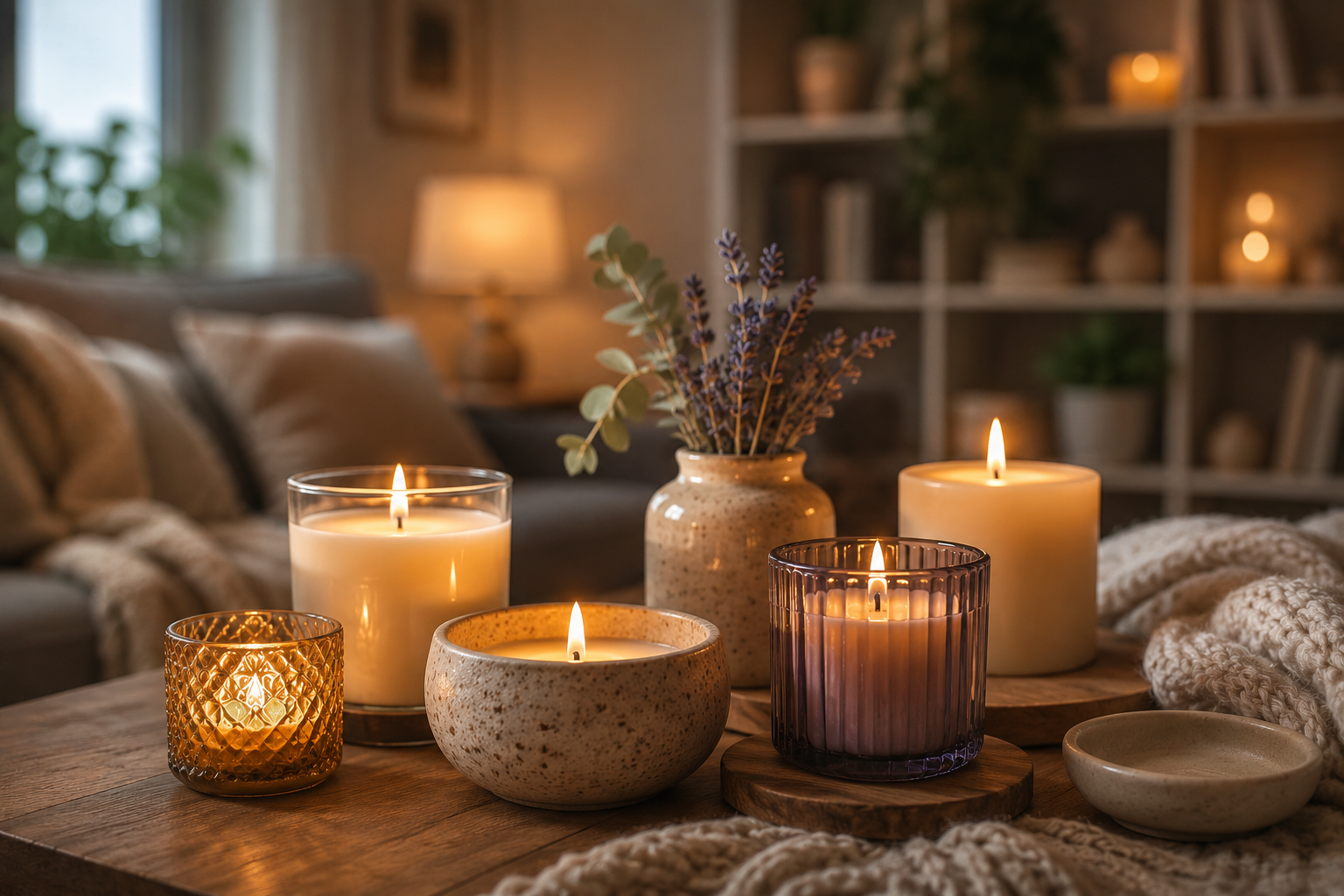
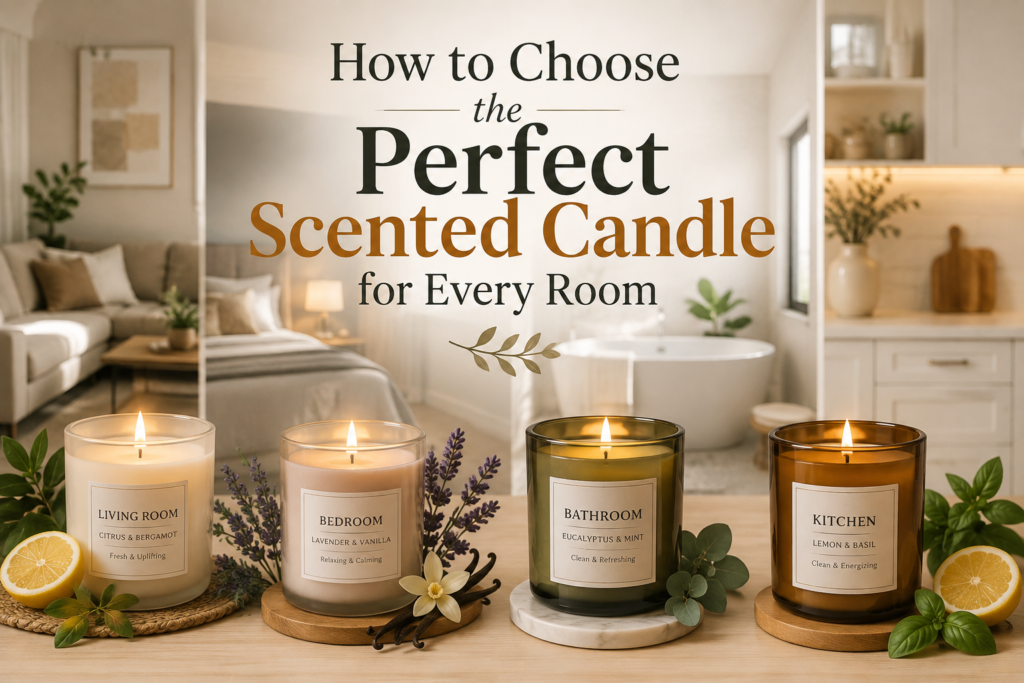
Walk into a candle shop and every jar smells wonderful. Take that same candle home, light it in your bedroom, and something feels off. It’s too sweet, too faint, or simply wrong for the space.
That happens because scent behaves differently in every room. A fragrance that feels warm in a living room can feel heavy in a small bathroom, and a candle that smells perfect in a shop full of other scents often performs differently once it’s burning alone at home.
Choosing the right scented candles isn’t about finding “the best” candle. It’s about matching wax quality, fragrance type, and scent family to the room, plus a few safety basics. This guide walks through exactly how, room by room.
What Makes a Scented Candle “Good”?
Before comparing scents, it helps to know what separates a well-made candle from an average one. Four factors matter more than brand name or packaging.
Fragrance Strength. “Cold throw” is how strong a candle smells unlit. “Hot throw” is how well it fills a room once lit. A candle can smell incredible in the jar and barely register once burning, the most common disappointment buyers report.
Wax Quality. Wax affects how evenly a candle burns, how long it lasts, and how much soot it produces. The next section compares the main wax types.
Burn Time and Value. A larger jar isn’t automatically a better deal, so compare burn time in hours against price rather than jar size alone.
Craftsmanship and Sourcing. Small-batch, hand-poured candles are typically tested more carefully than mass-produced ones, meaning more consistent scent throw and fewer shortcuts.
Quick Checklist Before You Buy:
- Burn time listed in hours, not just jar size
- Wax type clearly stated
- Essential oil or fragrance oil specified
- Care instructions included
- Ingredients disclosed, not just “fragrance”
Choosing the Right Wax
The wax is a candle’s fuel, and different waxes burn differently.
| Wax type | Source | Burn quality | Scent throw | Best for |
|---|---|---|---|---|
| Soy | Soybean oil | Clean, slow | Moderate to good | Everyday use, sensitive noses |
| Paraffin | Petroleum | Strong, consistent | Strong | Maximum scent throw |
| Beeswax | Bees | Very clean, long | Subtle | Unscented or lightly scented candles |
| Coconut | Coconut oil | Clean, slow | Good | Premium, eco conscious buyers |
Is paraffin wax actually bad for you? This is one of the most searched questions about candles, and the honest answer is nuanced. Research on candle emissions, including studies published in journals such as Environmental Science and Pollution Research, has found that candles, including paraffin ones, release trace volatile organic compounds during combustion. Under normal household use in a ventilated room, these levels stay well below what’s associated with health risk. The bigger concern isn’t the wax type. It’s soot, which forms from incomplete combustion regardless of which wax burns.
Myth vs. fact: Myth: “all-natural” labeling means a candle is soot-free. Fact: any wax soots if the wick runs too long. Wick care matters more than wax type.
Pro tip: If someone in your household has asthma or a fragrance sensitivity, soy or coconut wax with essential oils is usually the gentler choice, since these waxes burn at a lower, more even temperature.
Essential Oil vs. Fragrance Oil: What’s Actually in Your Candle?
Essential oils are extracted directly from plants and carry the plant’s natural aromatic compounds. Fragrance oils are formulated scent blends, often synthetic, built to replicate a smell, including ones that don’t exist in nature, like “clean linen.”
Neither is inherently unsafe when properly formulated, but they behave differently. Essential oils smell subtler but fade faster and cost more. Fragrance oils typically throw scent more strongly and hold up longer, which is why many commercial candles rely on them.
If you’re buying for aromatherapy, or you’re sensitive to synthetic fragrance, look for candles that explicitly disclose essential oils rather than vague terms like “natural scent.”
Also Read: How To Price Handmade Products
Understand Fragrance Families
Every candle scent falls into a few broad families. Learning these makes choosing scents easier, since you’re matching a category instead of guessing from hundreds of names.
| Fragrance family | Mood it creates | Common notes | Best rooms |
|---|---|---|---|
| Floral | Soft, calming | Rose, jasmine, lavender | Bedroom, bathroom |
| Woody | Grounded, cozy | Sandalwood, cedar | Living room, bedroom |
| Citrus and fresh | Energizing | Lemon, orange, eucalyptus | Kitchen, bathroom |
| Gourmand | Comforting | Vanilla, cinnamon, coffee | Living room, kitchen |
| Oriental and spicy | Rich, luxurious | Amber, clove, musk | Living room, entryway |
The Room by Room Guide to Choosing a Scented Candle
This is where fragrance family, wax choice, and room purpose come together for your home decor and its scent.
Bedroom:
Quick answer: Choose soft floral or woody scents like lavender, chamomile, or sandalwood in a soy or coconut wax candle, in a smaller jar than you’d use in a living room.
Your bedroom’s job is to help you wind down, so avoid anything sweet or energizing. Lavender is the most researched fragrance for this purpose. Peer-reviewed sleep studies have linked lavender aroma exposure to improved sleep quality and reduced sleep latency in some participants. The evidence isn’t dramatic, but it’s more substantiated than most fragrance claims in this category.
Safety note: Never fall asleep with a candle burning. Light it 30 to 45 minutes before bed and extinguish it before you turn in.
Living Room:
Quick answer: Living rooms handle bolder, layered scents well, including woody, gourmand, or spicy notes, since the space is larger with more airflow.
This is the room where a stronger scent throw works in your favor. Amber, cedarwood, and vanilla-based blends read as warm and welcoming without overwhelming guests. If your living room opens into a kitchen, choose a scent that won’t clash with cooking smells. Woody notes blend better than sweet, dessert-like ones in open-plan spaces.
Kitchen:
Quick answer: Citrus and herbal scents such as lemon, orange, basil, and rosemary work best here because they cut through cooking odors rather than compete with them.
Avoid heavy gourmand candles in this space, since a vanilla or bakery-scented candle next to real cooking smells can feel cloying. Keep candles away from the stove, and place them on a windowsill or counter away from splash zones.
Bathroom:
Quick answer: Bathrooms suit fresh, spa-inspired scents like eucalyptus, sea salt, or light florals, since the space is small and scent concentrates quickly.
Because bathrooms are usually the smallest room in the house, a strong-throw candle can overpower it fast. A lighter fragrance load, burned briefly, works better than a large jar candle.
Entryway or Majlis:
Quick answer: Entryways and majlis or sitting areas benefit from a scent that’s neutral but memorable, such as a light woody or citrus blend, since this is the first impression guests get.
Keep this scent distinct from your living room candle if the two spaces sit close together, so they don’t blend into a confusing mix.
| Room | Best families | Avoid | Size |
|---|---|---|---|
| Bedroom | Floral, light woody | Strong gourmand | Small to medium |
| Living room | Woody, gourmand, spicy | Very light florals | Medium to large |
| Kitchen | Citrus, herbal | Heavy dessert scents | Small to medium |
| Bathroom | Fresh, light floral | Strong woody or spicy | Small |
| Entryway | Light woody, citrus | Duplicate of living room | Small to medium |
Candle Safety Essentials Every Home Should Know
Good scent choices matter, but safety matters more. The National Candle Association recommends these practices:
- Trim the wick to roughly a quarter inch before every burn to prevent high flames and soot.
- Keep candles at least 12 inches from anything flammable, such as curtains, bedding, and paper.
- Never leave a burning candle unattended.
- Candles should be placed in a candle holder.
- Burn in a well-ventilated room, away from drafts.
- Stop burning once about half an inch of wax remains.
Warning: Never use water to extinguish a candle. It can cause hot wax to splatter. A snuffer, or gently blowing out the flame, is safer.
How long can you safely burn a candle at once? Most manufacturers recommend no more than 3 to 4 hours per session, since longer sessions can cause the wick to mushroom and overheat the container.
Fixing a tunneling candle: Tunneling happens when a candle doesn’t form a full melt pool on its first burn. Let a new candle burn until the wax melts to the jar’s edges the first time. This “memory burn” prevents tunneling later.
Are Scented Candles Safe Around Kids?
Most candle guides skip this question entirely, but it deserves a direct answer.
For children’s rooms and nurseries: avoid strong essential oil concentrations or synthetic fragrance blends, and keep any open flame out of reach. A lightly scented, natural wax candle burned in another room is safer than one burned directly in a nursery.
Why Handmade Candles Are Worth Choosing
Mass-produced candles are formulated for shelf stability and cost efficiency across enormous batches. Handmade candles are typically poured in small batches, which lets makers test scent throw more carefully and adjust fragrance load by hand.
This doesn’t mean every handmade candle is superior. Quality still varies by maker. But you’re more likely to find traceable ingredients, unique fragrance combinations, and a maker who can answer questions about what’s in the wax. On Crafty’s collection of handmade candles and home fragrances, each listing comes from an individual UAE-based maker rather than a mass manufacturer.
Best Scented Candles to Gift in the UAE
Candles are one of the easiest gifts to get right, or wrong. A safe choice leans toward lighter, less polarizing scents rather than bold or unusual ones.
| Occasion | Suggested fragrance family | Why |
|---|---|---|
| Housewarming | Woody or citrus | Welcoming, not overly personal |
| Eid or festive gifting | Warm floral or oriental | Matches the celebratory mood |
| Thank you gift | Light floral or fresh | Broadly liked, not overpowering |
| Corporate gifting | Fresh or lightly woody | Neutral, professional |
A smaller jar in a well-loved, classic scent is usually a safer gift than an unusual or very strong fragrance, since scent preference is personal.
Key Takeaways
- Match fragrance family to room purpose. Florals suit bedrooms, citrus suits kitchens, and woody or spicy notes suit living rooms.
- Wax type affects burn quality more than safety. Soot comes mainly from wick neglect, not wax choice.
- Trim wicks, ventilate rooms, and never leave a candle unattended.
- Around children and pets, favor lighter, natural wax candles and keep flames out of reach.
- Handmade, small-batch candles often offer more consistent scent throw and traceable ingredients than mass-produced ones.