
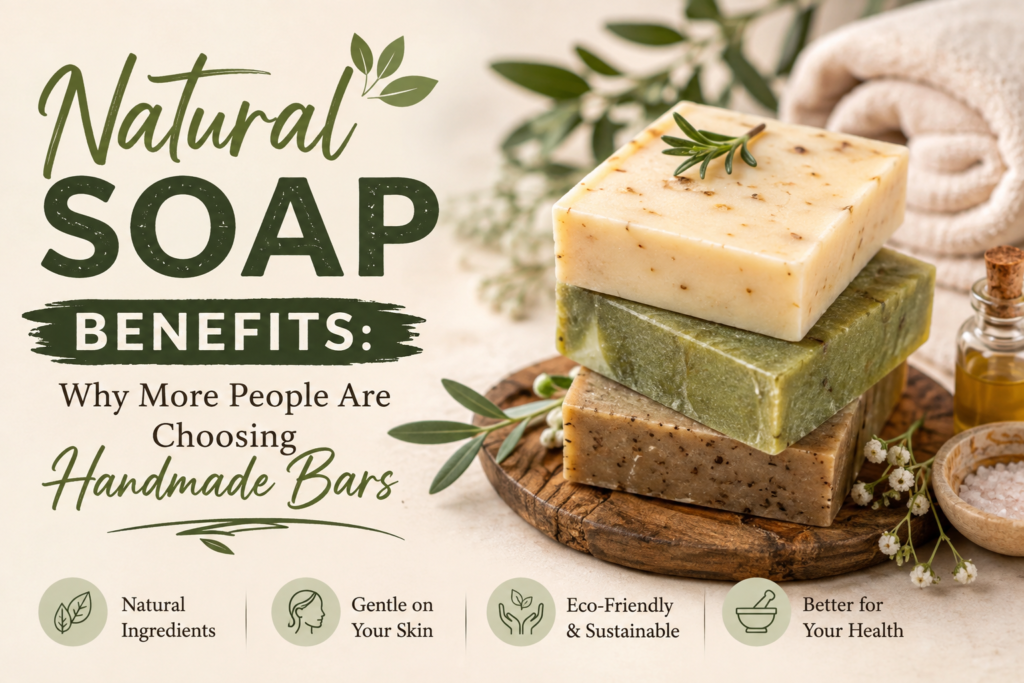
At a weekend market stall, it’s common to see someone turn a bar of soap over in their hands, read the short ingredient list on the wrapper, and ask the maker what’s actually inside it. That small habit says a lot about where personal care is heading. People aren’t just choosing a soap because it smells nice; they want to know what they’re washing with, where it came from, and who made it. This shift has put natural soap benefits back in the spotlight, and handmade bars are often at the center of the conversation.
This article looks at what natural and handmade soap actually are, which benefits are genuinely supported, what ingredients tend to matter, how these bars compare with conventional soap, and what’s worth considering before choosing one, including when a bar of soap makes a genuinely thoughtful gift.
What Is Natural Handmade Soap, Exactly?
Natural soap generally refers to bars made primarily from plant oils or animal fats combined with an alkali, rather than synthetic detergent bars built around petroleum-derived surfactants. Handmade soap describes how it’s produced, typically in small batches by an individual maker or a small studio, rather than what’s inside it. The two terms overlap often, but they aren’t interchangeable, and it’s worth understanding the difference before assuming one guarantees the other.
How Natural Soap Is Actually Made
Real bar soap is the result of a chemical reaction called saponification, in which fats or oils react with an alkali, usually sodium hydroxide, to form soap molecules and, as a natural byproduct, glycerin. This is different from many mass-market “soaps,” which are technically synthetic detergent bars formulated around cleansing agents rather than produced through saponification. Traditional soap making, whether cold-process (which cures over several weeks) or hot-process (which is ready sooner), retains this glycerin in the finished bar unless a manufacturer deliberately removes it, which some large-scale producers do to use elsewhere.
“Natural” and “Handmade” Aren’t Always the Same Thing
A soap is the essential handmade bathroom product which can be made in small batches and still rely on synthetic fragrance, dyes, or detergent additives. Equally, a soap produced on a slightly larger scale can still be formulated almost entirely from natural, plant-based ingredients. Neither word alone guarantees the other, which is exactly why the ingredient panel, not the packaging language, tells you what you’re actually buying.
Why More People Are Choosing Natural and Handmade Soap
Interest in natural and handmade soap has grown alongside a broader appetite for ingredient transparency and simpler personal-care routines. Shoppers who have started reading labels on food are increasingly doing the same with what they put on their skin, and a short, recognizable ingredient list feels reassuring in a way a long chemical name list doesn’t.
There’s also a craftsmanship element. Handmade soap is typically produced by individual makers or small studios who can explain exactly how a bar was formulated and why, rather than pointing to a corporate ingredient database. That direct connection between maker and buyer resonates with people who’d rather support an independent business than a mass-produced brand, especially as online marketplaces have made it far easier to discover artisans who might otherwise never have reached a wider audience.
None of this means natural or handmade automatically means superior. That nuance matters and is worth returning to throughout this article, but it does explain why the category has moved from a niche interest to a genuine consumer trend.
The Real Benefits of Natural Soap
Gentler Cleansing and a Healthier Moisture Balance
Because saponification naturally produces glycerin, and handmade soap typically retains it, these bars can help support the skin’s moisture barrier rather than stripping it during cleansing. Skin has a naturally slightly acidic pH, and many natural soap formulations are made with this in mind, though the exact feel varies by recipe and oil blend, so results differ from bar to bar.
Ingredient Transparency You Can Actually Read
One of the more practical benefits is simply being able to understand what’s in the bar. A natural soap’s ingredient list typically reads as recognizable oils, butters, and plant-based additions, rather than a long string of synthetic compounds. This transparency doesn’t automatically make a formulation better for your skin, but it does make it easier to identify what you’re using and to spot ingredients you personally want to avoid.
Natural Fragrance Instead of Synthetic Perfume
Many natural soaps are scented with essential oils or botanical extracts rather than synthetic fragrance blends. Lavender, citrus, and mint are common choices, valued for their scent profile and, in some cases, traditional associations with relaxation or freshness. It’s worth noting early that natural fragrance isn’t automatically gentler for every person. Some individuals react to essential oils just as they would to synthetic fragrance, which is covered in more detail later in this article.
A Smaller Environmental Footprint
Because natural soap is built from biodegradable plant oils and fats, it tends to break down more readily than synthetic detergent bars once it enters the water system. Handmade soap is also often sold with simpler, sometimes plastic-free packaging. These are genuine, reasonably well-supported advantages, though they depend on the specific formulation and packaging choices of each maker rather than being guaranteed across the entire category.
Supporting Small-Batch, Artisan Craftsmanship
Choosing a handmade bar soap also means supporting the person who made it: someone who has typically tested and refined a formulation over multiple batches rather than optimizing purely for shelf life and manufacturing cost. For many shoppers, that craftsmanship, along with the ability to ask a maker directly about their process, is itself part of the appeal.
What’s Inside: Ingredients Worth Knowing
Formulations vary considerably from maker to maker, so no single soap contains every ingredient below, but a handful of oils, butters, and additions show up often enough to be worth understanding.
Olive oil is a mild, conditioning base oil long used in traditional soap making, prized for producing a gentle, long-lasting bar. Coconut oil contributes cleansing power and a fuller lather, though makers typically balance it carefully with other oils, since used alone at high concentrations it can be drying. Shea butter is a rich emollient commonly added in smaller proportions to boost the bar’s moisturizing feel, a role it plays across many body-care products beyond soap.
Glycerin, as already mentioned, is the natural humectant produced during saponification. It draws moisture toward the skin and is part of why handmade soap often feels less stripping than expected. Botanical additions like oatmeal, clays, or ground seeds are sometimes included for mild texture or light exfoliation, and colors may come from plant powders or clays rather than synthetic dyes. Essential oils provide fragrance and, for some people, a pleasant sensory ritual, but they’re also the ingredient most likely to cause sensitivity in susceptible skin.
The point of understanding these ingredients isn’t to memorize a checklist. It’s to read a soap’s ingredient list with enough context to know roughly what each item is doing there.
Natural Soap vs. Conventional Soap: What Actually Differs
The core differences between natural and conventional soap usually come down to formulation, production scale, and glycerin content, not a simple case of one being universally better. Conventional soap and body wash are often made with synthetic surfactants, which are heavily regulated, consistently produced, and work perfectly well for a great many people. Some mass-market bars also remove glycerin during manufacturing to use in other products, which can leave the finished bar feeling more drying.
Handmade, naturally formulated soap tends to differ in a few consistent ways:
- It typically retains its glycerin rather than having it extracted.
- Its ingredient list is usually shorter and built around recognizable plant oils and butters.
- Fragrance more often comes from essential oils rather than synthetic fragrance blends.
- It’s produced in smaller batches, which allows for more formulation flexibility but also more variation between batches.
None of this means conventional soap is inherently harsh or that every handmade bar is automatically superior. A poorly balanced natural formulation can still feel drying, and a well-formulated conventional bar can still be perfectly gentle. Formulation, in other words, matters more than the label on the wrapper.
Read More: Handmade Gift Ideas
Is Natural Soap Right for Your Skin? What to Consider
It’s tempting to assume “natural” automatically means suitable for every skin type, but that isn’t accurate. Essential oils and other plant-based ingredients can still cause irritation or allergic reactions in some people, in much the same way synthetic fragrance can. Sensitivity depends on the individual and the specific ingredient, not on whether something is labeled natural.
For anyone with known sensitivities, a history of skin allergies, or particularly reactive skin, it’s worth checking the full ingredient list before buying and doing a small patch test i.e baby shower soap: applying a little lathered soap to a small area of skin and waiting a day or so before using it more broadly. This is especially relevant for soaps that list multiple essential oils, since fragrance ingredients are among the more common causes of contact irritation.
That said, many people do find that simpler, plant-based formulations feel gentler on dry or easily irritated skin than heavily fragranced commercial products, particularly when a soap is unscented or lightly scented and formulated with nourishing oils like olive oil or shea butter. The honest answer is that individual skin needs vary, and the best way to know how a specific bar will feel on your skin is to try it, ideally starting with a smaller bar or sample rather than committing to a large batch.
How to Choose a Natural Soap Bar
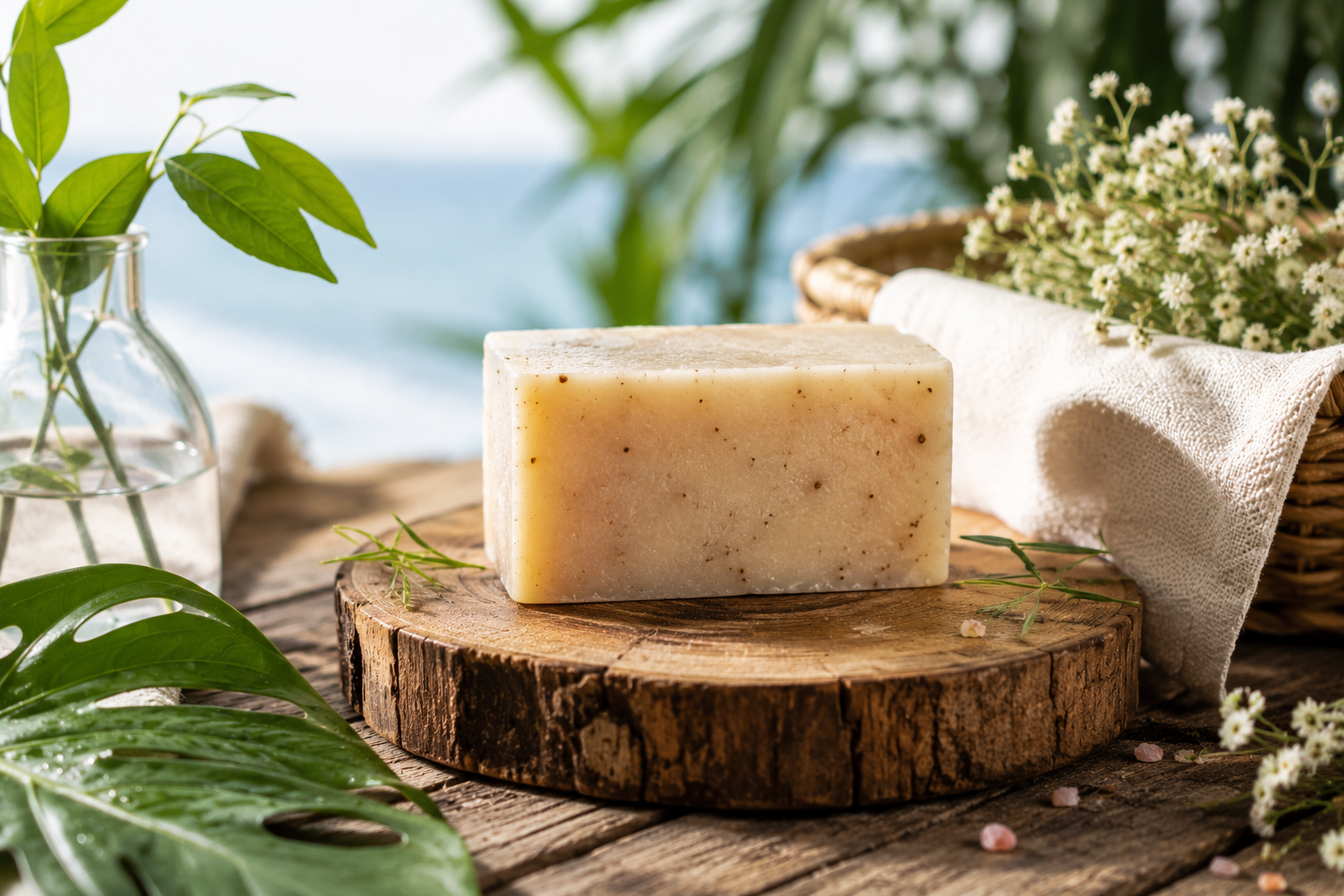
A few practical checks make it easier to choose a bar that’s likely to suit your skin and expectations:
- Read the full ingredient list rather than relying on front-of-pack words like “natural” or “organic.”
- Check whether fragrance comes from essential oils or a generic “fragrance” listing, especially if you have sensitive skin.
- Consider your skin type: richer, butter-heavy bars for dry skin, lighter, simpler formulations for oily or acne-prone skin.
- Look for a cure date or batch information where available, since properly cured cold-process soap tends to be milder and longer-lasting.
- Favor makers who are transparent about their ingredients, sourcing, and process, since that openness is usually a good sign of formulation care.
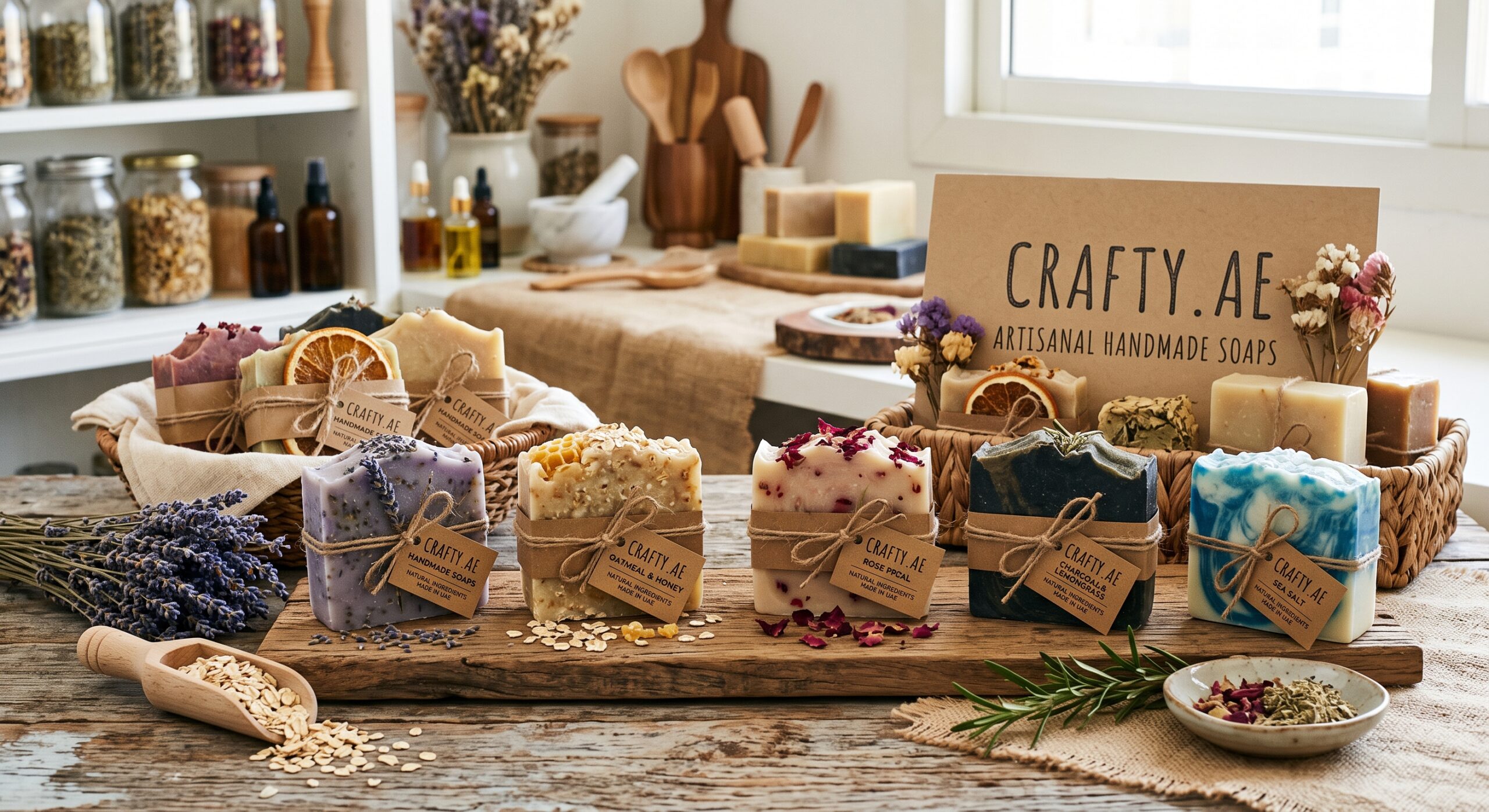
Marketplaces built around independent makers, such as Crafty, can make this kind of comparison easier, since they typically let you see a maker’s full ingredient list and ask questions directly rather than relying on generic packaging claims alone.
Why Handmade Soap Also Makes a Thoughtful Gift
Beyond personal use, handmade soap has become a popular small gift, and it’s easy to see why. A well-made bar feels considered rather than generic, works well as a self-care gift on its own or tucked into a larger gift basket, and suits a wide range of occasions: a birthday, a housewarming, a small thank-you, or even wedding favors for guests. Because handmade soap is produced in small batches with attention to scent and appearance, a simple bar can feel more personal than a mass-produced alternative, without needing to be expensive. It’s a modest gesture, but often a memorable one.
Frequently Asked Questions
The Bottom Line
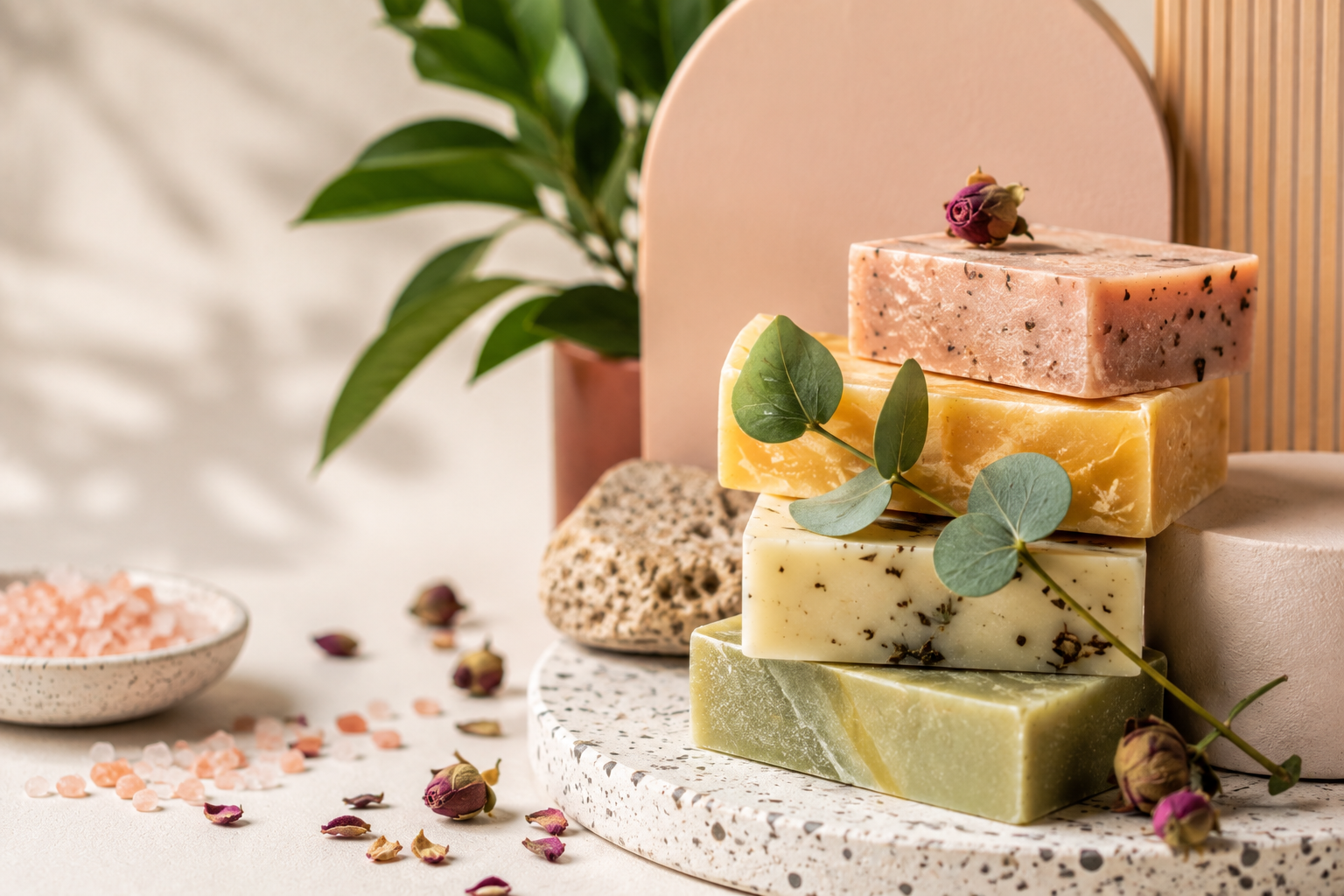
Natural and handmade soap offer real, specific advantages: retained glycerin, transparent ingredient lists, natural fragrance, a lighter environmental footprint, and the appeal of supporting independent makers. None of that makes “natural” a guarantee of being right for every skin type; formulation and individual sensitivity still matter more than the label. What it does offer is a genuinely different way to think about a daily habit most people never examine closely, and for many, that’s reason enough to try a handmade bar and see how it feels.