
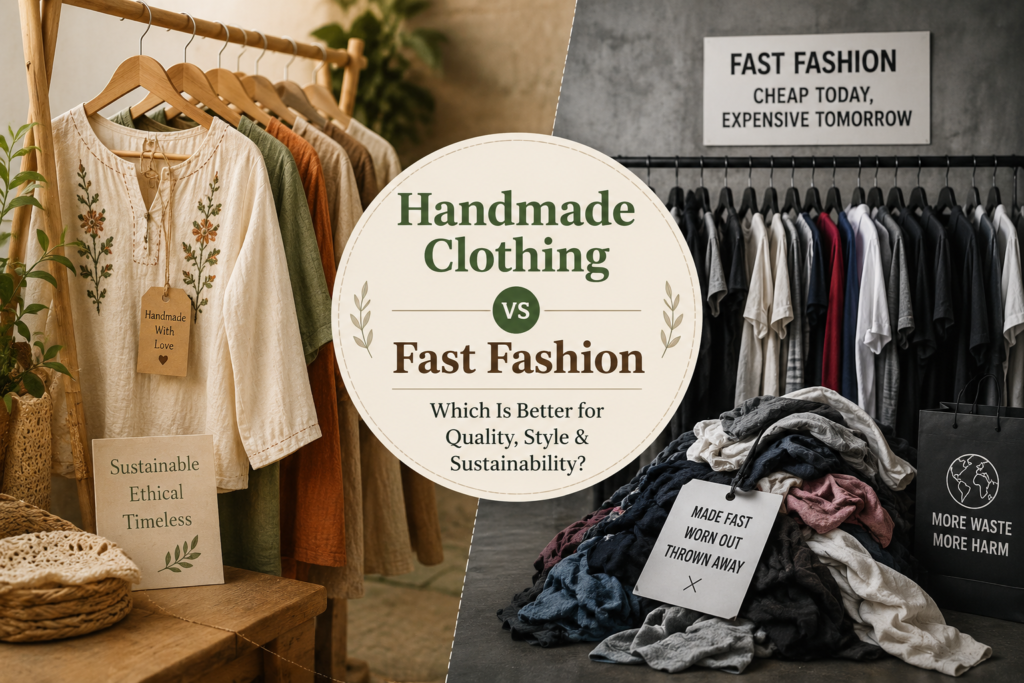
Every wardrobe decision now comes with a hidden question: was this made to last, or made to be replaced? Fast fashion trains shoppers to think in terms of price per item. Handmade clothing asks a different question: what does this piece cost over the years you’ll actually wear it?
Neither answer is automatically right. A $12 fast fashion t-shirt and a $90 hand-sewn one aren’t failing or succeeding at the same job. This article compares handmade clothing vs fast fashion across the factors that matter most when deciding where to spend: quality, durability, style, sustainability, ethics, and long-term value.
Short answer: Clothing tends to offer stronger craftsmanship, more distinctive design, and better durability, largely because of how it’s made: smaller batches, closer attention per garment, and often higher-quality materials. Fast fashion wins on price, availability, and speed. Sustainability isn’t automatic on either side; it depends on the specific materials, how long a garment is actually worn, and how it’s cared for and eventually disposed of.
| Factor | Handmade Clothing | Fast Fashion |
|---|---|---|
| Quality | Higher on average, but varies by maker | Inconsistent; ranges from adequate to poor |
| Durability | Generally longer-lasting with proper care | Often shorter lifespan, especially budget lines |
| Style | Unique, small-batch, or one-of-a-kind | Trend-driven, widely repeated designs |
| Production | Slow, small-scale, hands-on | Fast, high-volume, automated |
| Sustainability | Depends on materials and lifecycle | Generally higher footprint due to volume and turnover |
| Price | Higher upfront cost | Lower upfront cost |
| Uniqueness | High: limited runs or custom pieces | Low: mass-replicated designs |
| Long-term value | Often better cost per wear over time | Can be less economical if replaced frequently |
What Is Handmade Clothing?
Handmade clothes are apparel made by an individual artisan or small team, typically in limited quantities, with significant manual involvement in cutting, sewing, or finishing. It ranges from fully bespoke, made-to-measure garments to small-batch collections from independent makers who still use machines for parts of the process but apply hands-on craftsmanship throughout.
What separates it from mass production isn’t the absence of machinery (most handmade clothing still uses a sewing machine); it’s scale and attention. A maker working a run of a dozen dresses can adjust stitching, check seam alignment, and catch flaws that a factory line producing thousands of identical units per day would miss. Customization is often part of the offer too: sizing adjustments, fabric choices, or made-to-order details a mass-market retailer can’t accommodate.
Worth being direct about something many handmade sellers gloss over: handmade doesn’t automatically mean high quality. A poorly sourced fabric or inexperienced maker can produce a garment that falls apart as fast as a cheap factory one. Quality still comes down to the same fundamentals as any garment: material, construction, and skill. The production model just makes it easier to get those fundamentals right.
What Is Fast Fashion?
Fast fashion is a business model built around rapidly translating runway and trend cycles into affordable, mass-produced clothing, often within weeks of a trend appearing. Retailers using this model prioritize speed and volume: new styles arrive constantly, prices stay low, and production scales into the tens or hundreds of thousands of units per design.
The model exists because it works for a lot of shoppers. It makes trend-driven style accessible to people who couldn’t otherwise afford to update their wardrobe every season, and it offers huge variety, near-instant availability, and consistent sizing across large catalogs. For a work uniform piece, a one-time event outfit, or a growing child’s next size up, fast fashion solves a real problem.
The trade-offs are real too. To hit low price points at high volume, fast fashion often relies on thinner fabrics, simplified construction (fewer stitches per seam, lighter interfacing, glued rather than sewn details), and supply chains stretched across multiple countries to minimize labor costs. Not every fast fashion garment is poorly made; some mid-range lines hold up reasonably well. But the model’s core incentive is turnover, not longevity, and that shows in the average garment’s lifespan.
Handmade Clothing vs Fast Fashion: What’s the Difference?
The clearest way to see the difference is production scale. Handmade clothing is made in units of ones, dozens, or low hundreds; fast fashion in the thousands to millions. That one variable shapes almost everything else.
Materials: Handmade makers often choose natural or higher-grade fabrics because fabric cost per garment matters less at small volumes. Fast fashion buys in bulk, which favors cheaper synthetic blends that keep per-unit costs down.
Quality control: A small-batch maker can inspect every piece. A factory running high-speed lines relies on statistical sampling, so some percentage of flawed garments will always reach the shelf.
Design originality: Handmade products are often original or produced in limited runs. Fast fashion designs are deliberately replicated at scale, which is part of what makes them affordable and part of why they feel disposable.
Pricing: Fast fashion’s low price reflects volume efficiency and lower labor cost per item. Handmade pricing reflects the opposite: skilled labor time and smaller runs with no economies of scale.
Producer relationships: Buying handmade often means a direct or near-direct relationship with the maker. Fast fashion supply chains are long and layered, making working-condition and sourcing transparency harder to verify.
Which Offers Better Quality and Durability?
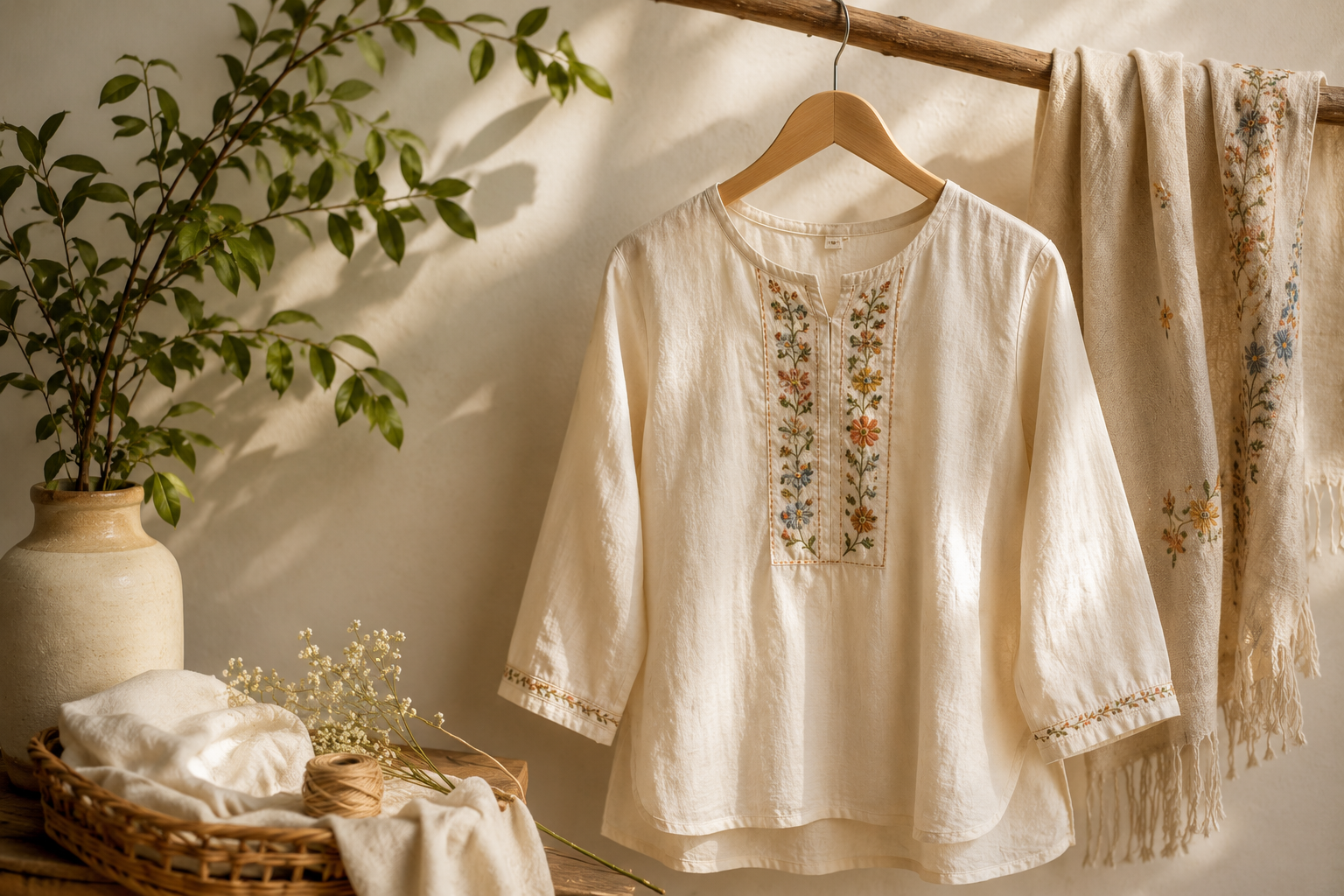
On average, handmade clothing tends to be better constructed. But “handmade” isn’t a quality guarantee on its own, and “fast fashion” isn’t automatically synonymous with poor construction.
The measurable differences to look for are the same regardless of who made the garment: stitch count and consistency (tighter, more even stitching resists unraveling), seam finishing (bound or serged edges outlast raw edges), fabric weight and fiber content (natural fibers like cotton, linen, wool, and silk generally wear and age better than thin synthetic blends), and closure quality (metal zippers and sewn-on buttons outlast fused or glued alternatives).
Handmade garments often score better on these points because the production model rewards it: a maker selling directly to customers has their reputation riding on each piece, with no pressure to shave seconds off a stitch count to hit a factory quota. Fit is another advantage: made-to-measure clothing is built around an individual’s proportions rather than a standardized size block. Repairability follows the same logic, since straightforward construction and quality fabric make it easier to let out a seam, replace a button, or patch a tear, while many fast fashion construction shortcuts make repair difficult or not worth the effort.
None of this means every handmade item outlasts every fast fashion item. A well-made piece from a quality-focused fast fashion brand can outlast a rushed, low-effort handmade garment from an inexperienced maker. The label matters less than the construction.
Read More: Scented Candle
Which Offers More Unique Style?
Handmade clothing has a clear edge here. Because pieces are produced in small runs or made to order, you’re far less likely to run into someone wearing the exact same item. Independent makers also tend to work outside dominant trend cycles, producing designs shaped by personal aesthetic or craft tradition rather than what’s algorithmically trending that month. Customization compounds this: choosing a fabric, adjusting a silhouette, or requesting a specific detail turns a garment into something closer to personal expression than a purchase off a shelf. The same logic extends to accessories; a handcrafted piece of jewelry can round out a look the same way a handmade garment does, adding a detail that isn’t mass-replicated.
Fast fashion’s strength is different: breadth. If you want to try a trend cheaply before committing, mass-market retailers offer a range small makers can’t match. The trade-off is that trend-driven design is, by definition, widely replicated. “Unique style” and “everyone is wearing it” pull in opposite directions.
Is Handmade Clothing More Sustainable Than Fast Fashion?
Not automatically. Sustainability is a lifecycle question. What the garment is made from, how it’s produced, how long it’s actually worn, and what happens to it afterward all factor in.
Handmade clothing has structural advantages here. Small-batch production avoids the overproduction that characterizes fast fashion, where unsold inventory is a known source of waste. Independent makers more often choose natural fibers, which biodegrade more readily than the synthetic blends common in low-cost fast fashion. And garments built to be repaired and worn for years reduce the replacement purchases that drive a garment’s total environmental footprint.
But handmade isn’t automatically low-impact. A handmade garment shipped internationally in excess packaging, made from a resource-intensive fabric, and worn only a handful of times doesn’t outperform a well-made, heavily worn fast fashion piece on a lifecycle basis. Sustainability tracks more closely with how long and how often something is worn than with how it was produced; production method is one input among several, not the whole equation.
Why Fast Fashion Has an Environmental Cost
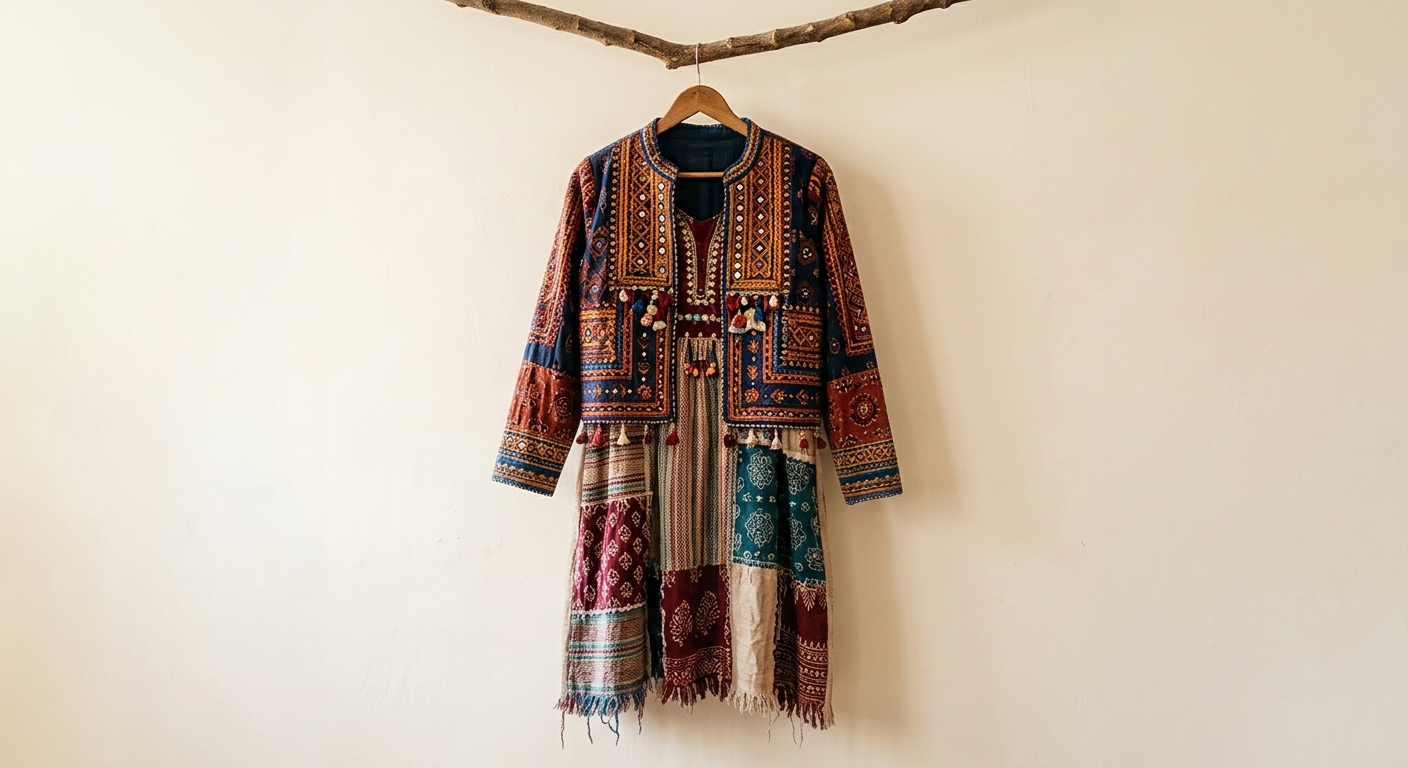
The fast fashion model’s environmental cost is well documented by international bodies, even if individual claims online are often overstated or poorly sourced. According to the UN Environment Programme, the global fashion industry is responsible for roughly 10% of annual global carbon emissions, more than international flights and maritime shipping combined, and it ranks among the largest consumers of water globally. Textile waste is a growing concern too: recent UNEP figures put the industry’s annual waste output in the tens of millions of tonnes, with projections showing continued growth if current patterns hold.
Several factors specific to the model drive this. Rapid trend cycles encourage frequent purchasing and disposal over long-term wear. Reliance on synthetic fibers, now the majority of fibers used in clothing globally and up sharply from a few decades ago, means garments shed microplastic fibers during washing, contributing to ocean pollution. Volume production built around anticipated rather than confirmed demand also results in significant unsold, quickly discarded inventory.
This doesn’t mean every fast fashion purchase is an environmental disaster; a basic worn for years has a very different footprint than one worn twice and discarded. But the model’s structural incentives of speed, volume, and low cost work against the longevity that would reduce its overall impact.
Is Handmade Clothing More Ethical Than Fast Fashion?
Usually, but not by default. The clearest ethical advantage of handmade clothing is proximity: buying from an individual maker or small studio often means a direct relationship with the person who produced the garment, making fair pay and working conditions easier to verify. Fast fashion’s long, multi-country supply chains make that visibility much harder, and labor concerns, including low wages and poor working conditions in some manufacturing regions, are well documented in industry and journalistic reporting.
That said, “handmade” isn’t an ethics certification. Small-scale production can still involve underpaid labor, particularly in unregulated informal markets, and a maker’s size doesn’t guarantee fair practices any more than a large brand’s size guarantees unfair ones. The more reliable signal is transparency: does the seller disclose who makes the product, where, and under what conditions? That matters more than whether the label says “handmade.”
Why Handmade Clothing Can Be a Better Long-Term Value
The clearest way to compare value across production models is cost per wear, not sticker price. A $180 handmade coat worn twice a week each winter for eight years costs roughly 4 cents per wear. A $40 fast fashion coat replaced every year because the lining tears or seams give out can end up costing more over the same period, despite the lower upfront price.
This calculation doesn’t always favor handmade; it depends on how often something is worn and how well it holds up. But it explains why the “expensive” label attached to handmade clothing can be misleading. Durability, repairability, and timeless design (as opposed to trend-specific design that dates within a year or two) all extend a garment’s useful life. There’s also a behavioral effect worth naming: handmade and custom pieces, costing more per item and often carrying a personal connection to the maker, tend to get treated with more care than low-cost, easily replaceable ones, reinforcing the longevity advantage.
Is Handmade Clothing Worth the Higher Price?
Often, but not always. It depends on what you’re buying it for. Handmade clothing costs more for identifiable reasons: skilled labor takes real time per garment, production runs are too small to benefit from bulk-material discounts, and higher-grade fabrics cost more than the synthetic blends used in mass production. You’re paying largely for time and skill rather than economies of scale.
It’s worth it when durability, fit, or originality genuinely matter: an item you’ll wear regularly for years, or something tailored to your body. It’s a weaker case for occasional or short-term use, real budget constraints, or a trend piece you’ll likely retire within a season. A practical test: ask whether the garment’s expected lifespan and how often you’ll wear it justify the price difference. If the answer is genuinely no, fast fashion is the reasonable choice for that item.
Read More: How to Price Handmade Products for Maximum Profit
How to Identify High-Quality Handmade Clothing
Not all handmade clothing is created equal, so it helps to know what to check before buying:
- Fabric composition. Natural fibers (cotton, linen, wool, silk) or well-specified blends, not vague “fabric” descriptions.
- Stitch consistency. Even, tight stitching without loose threads or skipped stitches.
- Seam finishing. Bound, serged, or flat-felled seams outlast raw, unfinished edges.
- Closures. Sewn-on buttons and quality zippers outlast glued alternatives.
- Pattern alignment. Mismatched seams or off-grain fabric can signal rushed construction.
- Fit and structure. The garment should hold its shape, not sag or pull at seams.
- Fabric feel. Quality fabric has weight and drape; overly thin material is a warning sign.
- Maker transparency. Sellers who clearly explain materials, process, and origin are generally more trustworthy.
Running through even half this checklist will filter out a lot of low-effort “handmade” listings.
Handmade Clothing as a Thoughtful Gift
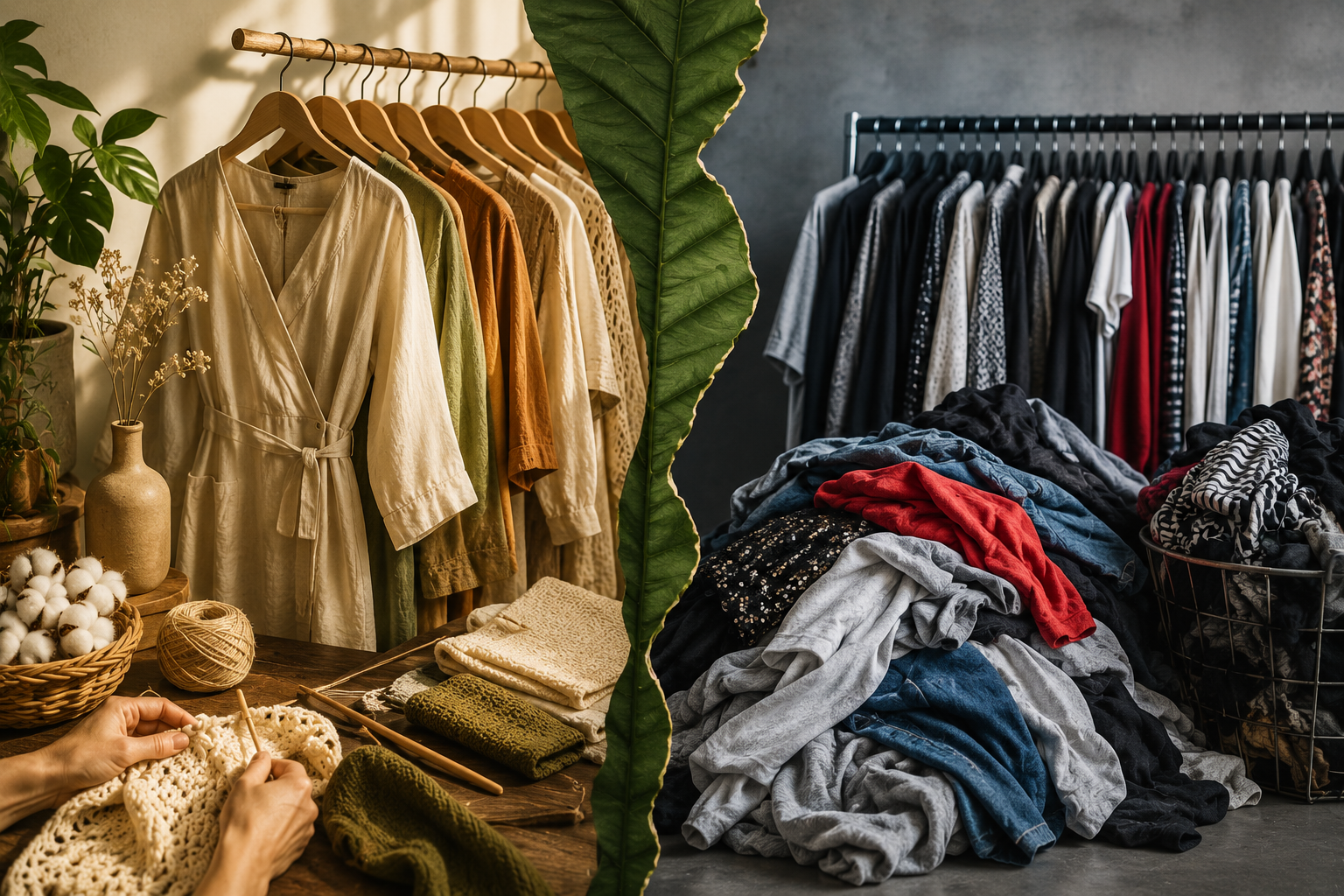
Because handmade pieces are unique or made in small runs, they tend to feel more personal than something picked off a mass-market shelf. That makes them a strong option for birthdays, anniversaries, or any occasion where the gesture matters as much as the item. A custom-fit piece or one-of-a-kind design signals a level of thought a repeated, widely available item can’t match, especially for someone who already appreciates artisan craftsmanship. Crafty UAE is a natural place to browse options from independent makers.
Which Is Better for You: Handmade Clothing or Fast Fashion?
There’s no single right answer. It depends on what you’re prioritizing for a given purchase.
Choose handmade clothing if you value:
- Craftsmanship and construction quality
- A unique or one-of-a-kind piece
- Long-term durability and repairability
- Custom fit or personalization
- A closer connection to who made your clothing
Fast fashion may suit you better if you need:
- The lowest possible upfront cost
- Something available immediately
- To try a trend before committing
- A wide range of options in one place
Most realistic wardrobes end up blending both: handmade or higher-quality pieces for items worn often and expected to last, fast fashion for trend experiments or short-term needs.
How to Build a More Sustainable Wardrobe
Regardless of where a specific item comes from, a few habits meaningfully reduce your overall footprint. These principles are close to what the slow fashion movement advocates: fewer, better-considered purchases instead of constant turnover.
- Buy fewer pieces, chosen more deliberately, over frequent small purchases.
- Prioritize versatile items that pair with what you already own.
- Check fabric composition; natural, durable materials generally age better.
- Care for garments properly and repair small damage instead of replacing.
- Rewear pieces rather than retiring them after a few uses.
- Consider secondhand or resale options for items you don’t need new.
- Support makers and brands transparent about materials and production.